
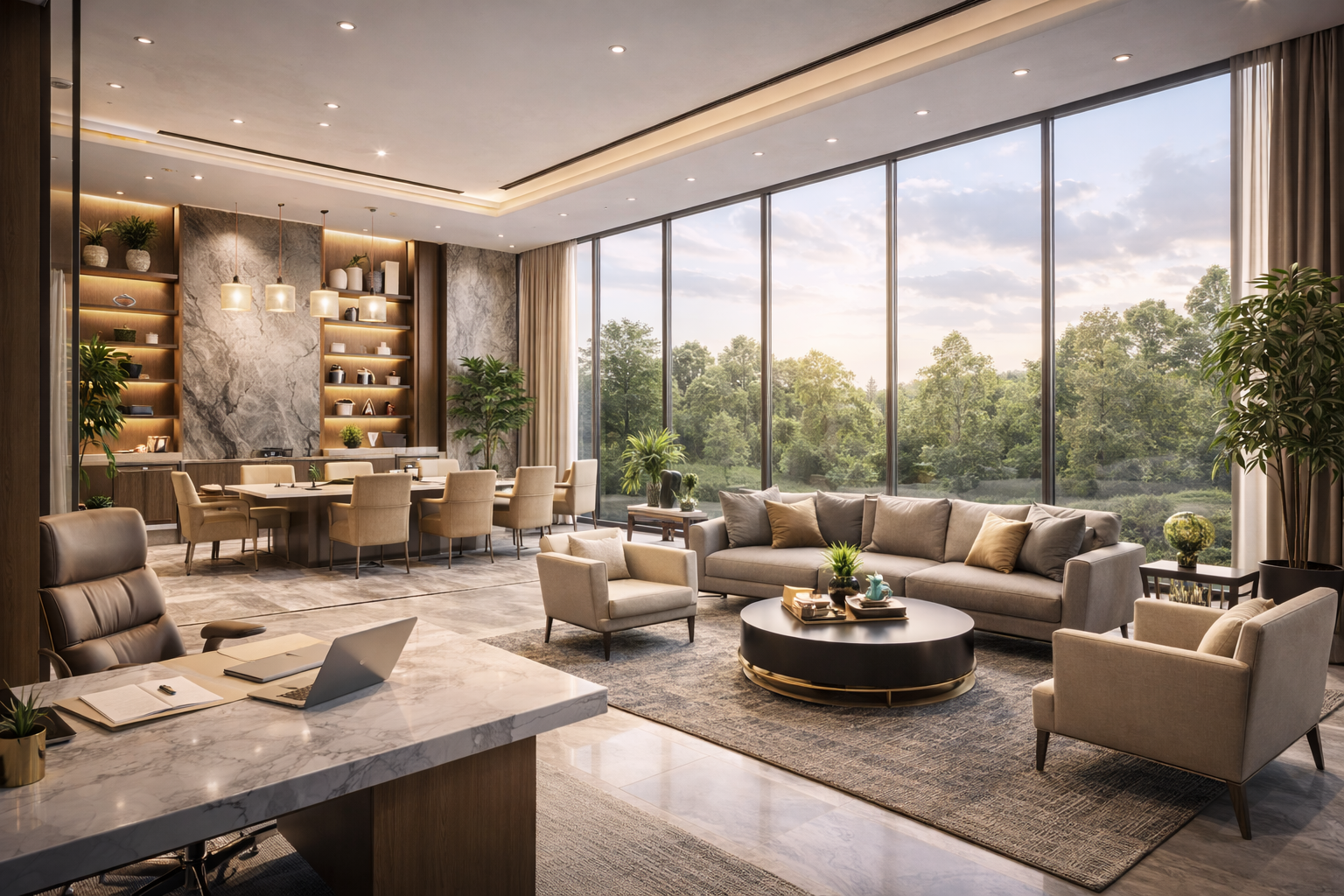
How Interior Design Impacts Employee Productivity and Client Impressions
Interior design plays a critical role in shaping how employees work and how clients perceive a business. A thoughtfully designed workspace is more than just visually appealing it directly influences mood, efficiency, focus, and comfort. Companies that invest in strategic interiors create environments that inspire teams and leave lasting impressions on visitors, giving them a competitive edge in productivity and brand credibility.
A well-planned interior improves employee productivity by enhancing functionality. Smart layouts reduce unnecessary movement, eliminate clutter, and support smoother workflows. When employees can access everything easily and work in an organized space, their energy shifts from adjusting the environment to performing their best. A functional office design acts as a silent productivity driver throughout the workday.
Lighting and color psychology are powerful elements that impact employee focus and motivation. Natural light boosts alertness, reduces stress, and increases overall well-being, while warm and balanced artificial lighting prevents fatigue. Similarly, the right color palette influences emotions calming tones support concentration, while energetic accents stimulate creativity. A workspace that balances light and color keeps teams mentally engaged and productive for longer hours.
Ergonomic and comfort-driven design significantly reduces physical strain and increases work efficiency. Comfortable seating, proper desk height, acoustic panels, breathable materials, and temperature-friendly finishes contribute to a healthier working experience. When interiors prioritize human comfort, employees experience fewer distractions, reduced stress, and improved performance, resulting in better outcomes for the company.
Interior design also shapes client impressions the moment they step into an office. A polished, branded, and welcoming environment communicates professionalism, stability, and attention to detail. Clients form opinions in seconds, often before conversations begin. A well-designed interior tells a story of trust and quality, influencing how clients feel about doing business with the brand.
Branded interior elements strengthen company identity and client recall. Using design themes that align with a business’s values modern, minimal, luxury, collaborative, or culturally inspired reinforces the brand personality. Whether through textures, décor, wall design, reception styling, or spatial ambiance, a cohesive interior creates emotional recognition, helping clients remember the business beyond meetings.
Finally, businesses must treat interiors as evolving assets, optimized for both people and perception. Regular enhancements based on employee needs, client expectations, and industry trends ensure that the space continues to perform as a productivity booster and a brand ambassador. When interior design aligns experience with expression, it becomes a long-term investment in business growth.